Skip to content

Animals come in many shapes and sizes. Some have long legs, while others have short, thick, or tiny legs. These body features help animals move, find food, dig holes, swim, and stay safe.
Animals with short legs live in many places around the world. You can find them in forests, grasslands, deserts, rivers, farms, and even homes. Some have long bodies, while others have large bodies and small feet.
In this guide, you will learn about animals with short legs, their names, habitats, body shapes, and interesting facts.
What Are Animals With Short Legs?

Animals with short legs have legs that look small compared to their bodies. Their legs may be short, thick, or close to the ground.
Some animals have short legs that help them dig underground homes. Others have long bodies that help them move through small spaces. Some have strong legs that support their heavy bodies.
Short legs are a natural body feature. They can help animals live in different habitats and find food.
Animals With Short Legs Names
Here are some common animals with short legs:
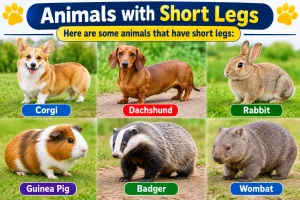
- Wombat
- Badger
- Dachshund
- Corgi
- Basset Hound
- Mole
- Hedgehog
- Beaver
- Ferret
- Penguin
- Hippopotamus
- Prairie Dog
- Platypus
- Tasmanian Devil
- Pug
- French Bulldog
- Tortoise
- Capybara
- Echidna
- Otter
- Groundhog
- Skunk
- Seal
- Pygmy Hippopotamus
These animals have different body shapes and live in different parts of the world.
Wild Animals With Short Legs
Many wild animals have short legs. Some use their legs to dig, crawl, or move through thick plants.
Wombat
The wombat is a wild animal from Australia. It has a round body, short legs, and strong claws. It uses its claws to dig deep burrows in the ground.
Badger
Badgers have long bodies, short legs, and strong claws. They dig underground homes called setts. They also use their sharp claws to search for food.
Mole
Moles live under the ground. They have small eyes, short legs, and wide front paws. Their strong front paws help them dig tunnels through soil.
Hedgehog
A hedgehog is a small animal with short legs and sharp spines on its back. It eats insects, worms, and other small foods.
Beaver
Beavers have strong bodies and short legs. They are good swimmers and use their teeth to cut trees. They build dams and lodges near rivers and lakes.
Tasmanian Devil
The Tasmanian devil lives in Tasmania, an island in Australia. It has a strong body, short legs, and a large head. It eats meat and also feeds on dead animals.
Prairie Dog
Prairie dogs are small mammals that live in North American grasslands. They have short legs and use their claws to dig large underground burrow systems.
Groundhog
The groundhog, also called a woodchuck, is a rodent from North America. It has a thick body, short legs, and strong claws for digging.
Animals With Long Bodies and Short Legs
Some animals have long bodies and short legs. Their bodies look stretched out, while their legs stay close to the ground.
This body shape can help animals move through narrow spaces, enter holes, and travel under plants.
Dachshund
The Dachshund is a dog breed with a long body and very short legs. It was bred to help hunt animals that lived in underground homes. People often call it a Wiener Dog.
Ferret
Ferrets have long, slim bodies and short legs. Their body shape helps them move through small spaces and narrow tunnels.
Weasel
Weasels have long bodies, short legs, and slim shapes. They can move quickly through grass and small holes while looking for food.
Badger
Badgers have long bodies, short legs, and strong claws. Their body shape helps them dig and move through underground homes.
Otter
Otters have long bodies and short legs. Their feet and bodies help them swim in rivers and lakes. Sea otters are also known for their thick, waterproof fur.
Skunk
Skunks have low bodies, short legs, and bushy tails. They can release a strong smell when they feel in danger.
Animals with long bodies and short legs are not all related. Their body shapes have developed in different ways to help them survive.
Zoo Animals With Short Legs

Some animals with short legs can be seen in zoos and wildlife parks.
Penguin
Penguins have short legs and bodies made for swimming. They use their wings like flippers to move through water. Penguins are birds, but they cannot fly.
Hippopotamus
A hippopotamus has a very large body and short-looking legs. It spends much of its time in water and comes onto land to feed.
Pygmy Hippopotamus
The pygmy hippopotamus is smaller than the common hippo. It lives in forests in West Africa and often stays near water.
Capybara
The capybara is the largest living rodent. It has a large body, short legs, and partly webbed feet that help it swim.
Red Panda
Red pandas have small bodies, short-looking legs, and long bushy tails. They live in forests and are good climbers.
Not every zoo keeps all these animals. Their homes depend on the zoo and its animal care plans.
Animals With Short Legs and Tail
Some animals have both short legs and tails. Their tails can help with balance, movement, or communication.
Wombat: It has short legs and a very small tail.
Badger: It has short legs and a short tail.
Corgi: This dog breed has short legs. Its tail can be short or long, depending on the type and individual dog.
Munchkin Cat: It has a normal cat body shape, very short legs, and a tail.
Red Panda: It has short-looking legs and a long, bushy tail.
Skunk: It has short legs and a large, fluffy tail.
Animals With Short Front Legs
Some animals have front legs that look shorter or smaller than their back legs. This body shape can help them move in special ways.
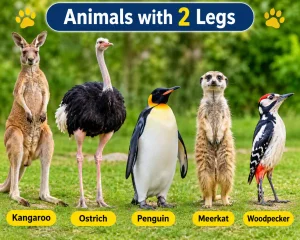
Kangaroos have small front limbs and powerful back legs. They use their back legs to hop across open land.
Pygmy jerboas also have tiny front legs and long back legs. They use their strong back legs to jump across desert ground.
These animals are different from animals with short legs on all four sides. Their front and back legs have different jobs.
Animals With Short and Thick Legs
Some animals have short and thick legs that support their bodies.
Tortoise
A tortoise has a hard shell and short, strong legs. Its legs help it carry its heavy shell and walk on land.
Hippopotamus
A hippo has a large body and short, strong legs. Its legs support its weight when it walks on land.
Bulldog
Bulldogs have strong bodies and short legs. The English Bulldog is known for its wide body and short face.
Komodo Dragon
The Komodo dragon is a large lizard with a long body and strong legs. It lives on some Indonesian islands and walks across dry land.
Echidna
An echidna has short legs and strong claws. It uses them to dig for ants and termites. It is a mammal that lays eggs.
Top 10 Skinny Animals With Short Legs
Some animals have slim or narrow bodies with short legs. Their body shapes help them move through grass, holes, and other small spaces.
Here are ten examples of slim or small-bodied animals with short or short-looking legs:
- Weasel
- Stoat
- Ferret
- Mink
- Otter Shrew
- Mole
- Pika
- Hedgehog
- Small Badger
- Prairie Dog
Not all these animals have the same body shape. Some are slim, while others have rounder bodies. Their legs may also look different based on their size and species.
Fast Animals With Short Legs

Short legs do not always mean an animal is slow. Some animals can move quickly even with small legs.
Badger: It can run when it needs to escape danger.
Weasel: It is quick and can chase small prey.
Ferret: It can move fast and turn quickly in small spaces.
Wombat: It may look slow, but it can run quickly for short distances.
Dachshund: It can run and play, even with its short legs.
Speed depends on an animal’s body, muscles, and natural skills.
Small Animals With Short Stubby Legs
The word “stubby” means short, thick, or blunt in shape. Some small animals have short stubby legs that keep their bodies close to the ground.
Examples include:
- Wombat
- Hedgehog
- Mole
- Munchkin Cat
- Guinea Pig
- Prairie Dog
- Pika
- Small Tortoise
These animals have different body shapes and habits. Some live underground, while others live in forests, fields, or homes.
What Is a Wombat?
A wombat is a wild animal that lives in Australia. It has a round body, short legs, small eyes, and strong claws.
Wombats dig burrows in the ground. They eat grass, roots, and other plants.
Their short, strong legs help them dig and move around their homes. Wombats are also known for their cube-shaped droppings.
What Is a Munchkin Cat?
A Munchkin cat is a cat breed known for its very short legs. Its short legs are linked to a natural genetic change.
Munchkin cats can have short, medium, or long fur. They come in many colors and patterns.
They can play and move like other cats, but their short legs may affect how they jump. Their body shape can also raise health concerns. People should choose responsible breeders and ask a vet about their care.
Animals With Long Legs and Short Arms
Some animals have long back legs and much smaller front limbs. People may sometimes call these front limbs “arms,” but animals do not always have arms like humans.
Kangaroos are a good example. They have strong back legs and smaller front limbs. They use their back legs to hop and their front limbs to hold food and help with other tasks.
Pygmy jerboas also have tiny front legs and long back legs. They use their back legs for jumping.
These animals are different from animals with short legs on all four sides.
Animals With Long Legs and Short Torsos
Some animals have long legs and shorter-looking bodies. Their body shape helps them walk, run, or move across open land.
Ostrich
The ostrich has long, strong legs and a body made for running. It is the largest living bird.
Flamingo
A flamingo has long legs and a body that helps it stand and feed in shallow water.
Giraffe
A giraffe has very long legs and a tall body with a long neck. It uses its height to reach leaves on trees.
These animals are different from short-legged animals because their legs are long compared to their bodies.
Animals With Big Bodies and Short Legs
Some animals have large bodies and short-looking legs. Their strong legs help carry their body weight.
Hippopotamus: It has a large body and short legs.
Wombat: It has a round body and strong, short legs.
Capybara: It has a large body and short legs that help it move on land and in water.
Tortoise: It carries a hard shell on its body and uses strong legs to walk.
Unusual Animals With Short-Looking Legs
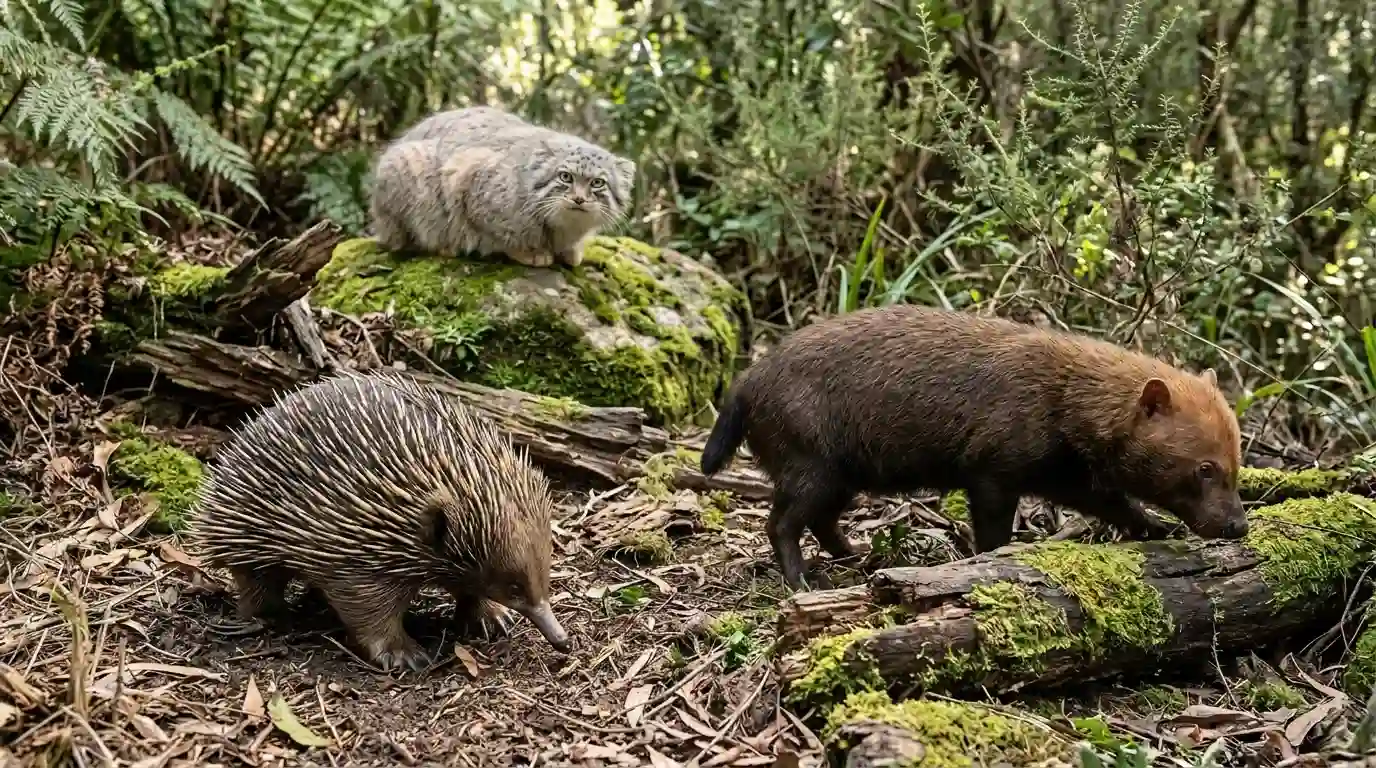
Some animals have body shapes that look different from most other animals.
Kiwi
The kiwi is a flightless bird from New Zealand. It has a round body, small wings, and strong legs.
Platypus
The platypus is a special mammal from Australia. It has a flat bill, webbed feet, and a body made for swimming. It can sense small electric signals made by its prey.
Axolotl
The axolotl is an aquatic animal with a long body and four small legs. It lives in water and can regrow some body parts. It keeps some young features as an adult. This is called neoteny.
Red-Eyed Crocodile Skink
The red-eyed crocodile skink is a small reptile with rough scales and short legs. It looks a little like a tiny crocodile.
Pygmy Jerboa
The pygmy jerboa is a tiny desert animal. It has very small front legs and long back legs for jumping. It is a useful example of an animal with different front and back leg sizes.
Why Do Some Animals Have Short Legs?
Animals have different body shapes because they live in different places and need different skills.
Digging
Animals like wombats, moles, and badgers use strong legs and claws to dig holes and tunnels.
Moving Through Small Spaces
Long-bodied animals like ferrets and weasels can move through narrow spaces.
Swimming
Animals like penguins, otters, and platypuses use their bodies and feet to move through water.
Supporting Heavy Bodies
Animals like hippos use strong legs to support their large bodies.
Staying Close to the Ground
Some animals can move under plants and hide from danger.
How Short Legs Help Animals Survive
Short legs can be useful in many habitats.
Animals that dig use their strong legs and claws to make safe homes. Animals with long bodies can enter small spaces to find food or hide.
Some animals use short legs to stay close to the ground. This can help them move under grass or low plants.
Some animals also use their body shape to save energy or keep warm. However, short legs are not always better. Every animal has body features that help it live in its own way.
Where Do Short-Legged Animals Live?
Short-legged animals live in many parts of the world.
Forests: Badgers, red pandas, and hedgehogs live in different types of forests.
Grasslands: Prairie dogs and wombats live in open areas where they can find food and shelter.
Deserts: Some small mammals, including jerboas, live in dry places.
Wetlands and Rivers: Beavers, capybaras, and otters live near water.
Australia: Wombats, platypuses, and echidnas are found in Australia.
New Zealand: Kiwis are native to New Zealand.
Indonesia: Komodo dragons live on Indonesian islands.
The habitat of each animal depends on its food, body, and survival needs.
Common Myths About Short-Legged Animals
There are a few common ideas about short-legged animals that are not always true.
All short-legged animals are slow: This is false. Some short-legged animals can run quickly.
All animals with short legs have long bodies: This is also false. Some have round or large bodies.
Short legs always mean an animal is small: Some large animals, such as hippos, have short-looking legs.
All short-legged animals live underground: Many live in forests, grasslands, water, and homes.
All animals with short legs are mammals: This is false. Penguins are birds, and tortoises are reptiles.
Why Are Short-Legged Animals Important?

Short-legged animals play important roles in nature.
Some dig holes that help air and water enter the soil. Moles and badgers can help move soil as they dig.
Beavers build dams that change the flow of water and create wet places for other animals. Some small mammals eat insects and help control their numbers.
Animals also form part of food chains. They may eat plants, insects, or smaller animals, and they may also provide food for larger predators.
Every animal has a role in its habitat. Even small animals can make a big difference.
FAQs
Wombats, badgers, moles, Dachshunds, Corgis, Munchkin cats, and penguins are some examples.
A wombat and a badger are two examples. Both have short legs and strong bodies.
Dachshunds, ferrets, weasels, badgers, and otters have long bodies with short or short-looking legs.
Stubby legs means legs that are short, thick, or blunt in shape.
When people use the phrase “stubby legs” for humans, they usually mean legs that look short or thick compared to the body. It is an informal phrase, not a medical term.
No. Some animals with short legs can run fast over short distances.
Pygmy jerboas and kangaroos have much smaller front limbs and strong back legs.
Penguins, hippos, pygmy hippos, and capybaras are examples of animals that may be seen in zoos.
Some short-legged dog breeds may have back or joint problems.
Wombats, tortoises, hippos, and some dog breeds have short or thick-looking legs.
Moles, badgers, wombats, and prairie dogs dig or use underground homes.
No. Penguins are birds. They have feathers, lay eggs, and use their wings to swim.
Final Thoughts
Animals with short legs come in many shapes and sizes.
Wombats, badgers, penguins, Dachshunds, Munchkin cats, and hippos are just a few examples. Their short legs can help them dig, swim, move through small spaces, or support their bodies.
Learning about these animals helps us understand how body shape and natural skills work together. Every animal is special in its own way.

Owen Parker writes about animals, wildlife, behavior, habitats, physical traits, and interesting species facts. He enjoys researching animal topics and explaining them in simple, clear language that is easy for everyone to understand.