Skip to content

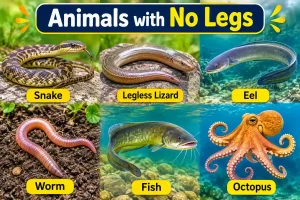
Animals with no legs are found on land, in water, and deep in the ocean. Snakes, worms, slugs, jellyfish, and octopuses are common examples.
These animals have special body shapes that help them live without walking legs. Some have long bodies, soft skin, fins, tentacles, or muscular feet. Others use their whole bodies to move.
In this guide, you will learn about animals with no legs, their names, habitats, food, movement, and interesting facts.
What Are Animals With No Legs Called?

Animals with no legs are often called legless animals or limbless animals.
The word limbless means an animal does not have legs or arms. Eels have fins, and whales have flippers.
Many legless animals belong to different animal groups. Some are reptiles, some are amphibians, and others are invertebrates.
List of Animals With No Legs
There are many animals with no legs in the world.
Here are some common and unusual examples:
| Animal Name | Habitat | How It Moves |
| Snake | Land and water | Slithers |
| Earthworm | Soil | Crawls |
| Slug | Gardens and forests | Uses a muscular foot |
| Snail | Land and water | Uses a muscular foot |
| Jellyfish | Ocean | Pulses through water |
| Hagfish | Ocean | Moves with body waves |
| Caecilian | Soil and water | Burrows |
| Ribbon worm | Ocean and wet places | Crawls and glides |
| Flatworm | Water and wet land | Glides |
| Roundworm | Soil and water | Wriggles |
| Leech | Freshwater and wet places | Crawls and swims |
| Glass lizard | Land | Slithers |
| Slow worm | Land | Slithers |
| Flowerpot snake | Soil and gardens | Burrows |
| Bobbit worm | Ocean floor | Crawls and hides |
| Sea angel | Ocean | Swims with small body movements |
| Lamprey | Freshwater and ocean | Swims |
| Sea cucumber | Ocean | Moves with tube feet |
| Octopus | Ocean | Uses its arms |
| Squid | Ocean | Uses fins and water jets |
Some animals in this table have fins, arms, or tube feet.
Land Animals With No Legs
Many animals without legs live on land. They move through soil, grass, gardens, forests, and other places.
Snakes
Snakes are well-known animals with no legs. They have long bodies covered with scales. They use strong muscles and belly scales to move across the ground.
Some snakes live in forests, deserts, grasslands, and near water. They eat insects, frogs, birds, eggs, and small mammals.
Common types include pythons, boa constrictors, and saw-scaled vipers.
Earthworms
Earthworms live in moist soil. They have long, soft bodies with many small body sections.
They move by tightening and relaxing their muscles. Tiny bristles on their bodies help them hold the soil.
Earthworms eat dead leaves and other decaying plant matter.
Slugs
Slugs are soft animals that look a little like snails without shells. They have a muscular foot under their bodies.
They move slowly by making waves of muscle movement. Slugs often live in gardens, forests, and damp places.
They eat leaves, plants, fungi, and decaying matter.
Snails
Snails are small animals with soft bodies. Many land snails carry a hard shell on their backs.
They use a muscular foot to move along the ground.
Snails often eat leaves, algae, and other plant material.
Slow Worms
They have smooth, shiny skin and can close their eyes.
Slow worms often live in gardens, grasslands, and woodlands. They eat slugs, worms, and small insects.
Glass Lizards
Many glass lizards have movable eyelids and openings for their ears.
Some can break off part of their tails to escape predators.
Flowerpot Snakes
Flowerpot snakes are very small, thin snakes. They often live in soil, gardens, and plant pots.This is why they are sometimes called flowerpot snakes.
Legless Skinks
Legless skinks are lizards with very small or missing legs. Their long bodies help them move through soil, sand, and leaf litter.
They are useful examples of how different lizard groups have adapted to life without legs.
Caecilians
Caecilians are unusual amphibians that look like worms or snakes. Most live underground in moist soil or near freshwater.
They have long bodies and no legs. They use strong muscles to dig through the ground.
Caecilians often eat worms, insects, and other small animals.
Sea Animals With No Legs

The ocean is home to many animals that do not have walking legs.
Jellyfish
Jellyfish have soft, jelly-like bodies. They do not have bones, a brain, or walking legs.
They move through water by pushing their bodies in and out.
Most jellyfish eat plankton, tiny fish, and small sea animals.
Octopus
An octopus has eight arms and a soft body. It does not have walking legs.
Octopuses eat crabs, shrimp, shellfish, and small fish.
Squid
Squid are sea animals with long bodies, fins, and several arms and tentacles.
They use their bodies to push water out and move quickly through the ocean.
Squid eat fish, shrimp, and other small sea animals.
Lampreys
Lampreys are jawless fish with long bodies. They have round mouths that look like suction cups.
Some lampreys attach themselves to other fish and feed on their blood and body fluids. Other species feed in different ways.
Lampreys live in freshwater or the ocean, depending on the species.
Ribbon Worms
Ribbon worms have long, soft bodies.
They move by using body muscles and a thin layer of mucus. Some species catch small animals with a special feeding tube called a proboscis.
Bobbit Worms
Bobbit worms live under sand and mud on the ocean floor. They have long bodies and wait for small animals to come close.
They can catch fish and other sea animals very quickly. Their strong jaws help them grab their prey.
Bobbit worms are known for their unusual hunting style.
Sea Angels
Sea angels are small, soft-bodied sea animals. They swim in open ocean water using small wing-like body parts.
They are related to sea snails and sea slugs. Their bodies look like tiny angels moving through the water.
Sea Pigs
Sea pigs are deep-sea animals related to sea cucumbers. They live on the ocean floor and feed on organic matter in the mud.
They have small tube feet that help them move.
Sea pigs are a good example of unusual animals found in deep ocean habitats.
Freshwater Animals Without Legs
Freshwater habitats include rivers, lakes, ponds, and streams. Many animals without walking legs live in these places.
Freshwater Eels
Freshwater eels have long bodies and look like snakes.
They swim by moving their bodies from side to side.
They eat small fish, insects, worms, and other water animals.
Leeches
Leeches are soft-bodied animals that often live in freshwater.
They use small suckers to hold onto surfaces.
Freshwater Flatworms
Flatworms have flat, soft bodies. Many live in freshwater streams and ponds.
They move by gliding over wet surfaces.
Some flatworms can regrow lost body parts. This ability is called regeneration.
Animals That Look Like Snakes but Are Not Snakes
Caecilians: These are amphibians that often live underground.
Slow worms: These are legless lizards, not snakes.
Glass lizards: These are reptiles with long bodies and movable eyelids.
Legless skinks: These are lizards that have very small or missing legs.
Flowerpot snakes: These are tiny snakes that often live in soil.
Eels: These are fish with fins, not snakes.
Learning the difference between these animals helps us understand animal classification.
Different Types of Worms Without Legs

Many worms have soft bodies and no legs. They live in soil, freshwater, and oceans.
Earthworms
Earthworms live in soil and help break down dead plant matter.
Flatworms
Flatworms have flat bodies and often live in water or damp places.
Roundworms
Roundworms have thin, round bodies. They live in soil, water, and inside some plants and animals.
Ribbon Worms
Ribbon worms have long bodies and often live in marine habitats.
Bobbit Worms
Bobbit worms live in the ocean and catch small animals using strong jaws.
How Do Animals Move Without Legs?
Animals without legs use different ways to move. Their bodies have special muscles and structures that help them travel.
Slithering: Snakes move by making waves along their bodies. Their belly scales help them push against the ground.
Crawling: Earthworms and slugs use muscles to move forward.
Gliding: Some flatworms move over wet surfaces with the help of tiny hair-like structures and mucus.
Burrowing: Caecilians and flowerpot snakes move through soil using their strong bodies.
Swimming: Jellyfish, eels, and hagfish move through water in different ways.
Jet Movement: Squid and octopuses can push water out of their bodies to move quickly.
Using Tube Feet: Sea cucumbers and sea pigs use small tube feet to move along the ocean floor.
Each animal has a body shape that helps it live in its habitat.
Why Do Snakes Have No Legs?
Snakes did not always have the same body shape that we see today. Scientists believe snakes evolved from ancestors that had legs.
Over a very long time, their bodies changed.
A long, narrow body helped early snakes move through tight spaces, soil, and thick plant. These are called vestigial structures.
The evolution of snakes is an example of how animals can change over many generations.
How Did Animals Lose Their Legs?
Different animal groups developed their body shapes over millions of years.
Some animals became better at moving through soil. Others adapted to swimming or living in water.
Scientists study fossils, bones, and animal bodies to learn about these changes.
This process is part of evolution. Natural selection helps explain how useful body features can become more common over many generations.
Mammals Without Walking Legs
Whales, dolphins, and manatees are examples.
Whales: Whales use flippers and strong tails to swim through the ocean.
Dolphins: Dolphins have front flippers and powerful tail flukes. They use them to swim and turn.
Manatees: Manatees have front flippers and a wide, flat tail. They use these body parts to move through water.
Animals Without Legs That Breastfeed

Whales, dolphins, and manatees are animals without walking legs that breastfeed their babies.
They are mammals, not fish. Their babies drink milk from their mothers.
Their front limbs have changed into flippers.
Animals With No Legs or Arms
Some animals have no legs or arms. They use their whole bodies to move.
Examples include:
- Snakes
- Earthworms
- Slugs
- Snails
- Jellyfish
- Caecilians
- Flatworms
- Roundworms
- Hagfish
Cute Animals With No Legs
Some animals without legs look cute or interesting to people.
Snails: Their small bodies and shells make them easy to recognize.
Jellyfish: Their soft bodies and flowing tentacles look beautiful in water.
Sea Angels: These tiny sea animals have wing-like body parts.
Slow Worms: Their smooth bodies and gentle movements make them interesting garden animals.
Beauty is different for everyone, and even small animals have an important role in nature.
Zoo Animals With No Legs
Zoos and aquariums may keep different animals without walking legs.
Some examples include:
- Pythons
- Boa constrictors
- Cobras
- Corn snakes
- Other snake species
- Jellyfish in aquariums
These animals need proper food, clean habitats, and the right temperature.
Not every zoo keeps all these animals. The species depend on the zoo and its animal care facilities.
Strange and Unusual Animals Without Legs
Hagfish: They make thick slime to protect themselves.
Bobbit Worm: It hides under ocean sand and catches prey.
Caecilian: It is an amphibian that looks like a worm.
Sea Angel: It swims through ocean water using small wing-like body parts.
Flowerpot Snake: It is a tiny snake that can travel in soil and plant pots.
These animals show how many different body shapes exist in nature.
Fastest Animals With No Legs
Some snakes are very fast. The black mamba is one of the fastest-moving snakes on land.
In water, squid and other fast marine animals use fins, strong bodies, or water jets to move quickly.
Speed depends on the animal, its habitat, and how it moves.
Animals With No Legs for Kids

Here are five easy examples of animals with no walking legs for kids:
Snake: A long animal that moves by slithering.
Earthworm: A small animal that lives in soil.
Slug: A soft animal that moves slowly.
Jellyfish: A sea animal with a soft body and tentacles.
Snail: A small animal that often carries a shell.
These are simple examples for children learning about animals without legs.
Animals With No Legs in Hindi
Here are some common animals with no legs and their Hindi names:
| English Name | Hindi Name |
| Snake | साँप |
| Earthworm | केंचुआ |
| Snail | घोंघा |
| Slug | बिना खोल वाला घोंघा |
| Leech | जोंक |
| Jellyfish | जेलीफ़िश |
| Octopus | ऑक्टोपस |
| Eel | बाम मछली |
These names can help children learn animal words in two languages.
Animals With No Legs Chart
This simple chart helps compare different animals without walking legs.
| Animal | Where It Lives | Main Food |
| Snake | Land and water | Small animals |
| Earthworm | Soil | Dead plant matter |
| Snail | Gardens and water | Plants and algae |
| Slug | Damp land | Plants and fungi |
| Jellyfish | Ocean | Plankton and small animals |
| Octopus | Ocean | Crabs and fish |
| Hagfish | Ocean | Dead or dying animals |
| Caecilian | Soil and freshwater | Worms and insects |
| Eel | Rivers and ocean | Fish and small animals |
| Leech | Freshwater and wet land | Blood or small animals |
What Do Animals With No Legs Eat?
Animals without legs eat many kinds of food.
Snakes eat small mammals, birds, frogs, and other animals. Earthworms eat dead leaves and decaying plant matter.
Slugs and snails often eat plants, algae, and fungi. Jellyfish eat plankton and small sea animals.
Octopuses eat crabs, shrimp, and shellfish. Hagfish often feed on dead animals found on the ocean floor.
Their food depends on their body shape, habitat, and way of life.
Are Animals Without Legs Dangerous?
Some snakes have venom that can hurt people. Other snakes are not venomous and usually avoid humans.
Most earthworms, snails, and slugs are not dangerous to people. Jellyfish can sting, and some species may cause painful injuries.
It is best not to touch unknown wild animals. Give them space and watch them safely.
Why Are Animals Without Legs Important?
Animals without legs play useful roles in nature.
Earthworms help improve soil by breaking down dead plants and making spaces in the ground.
Snakes help control the number of rodents and other small animals. Slugs and snails help break down plant material.
Hagfish help clean the ocean by eating dead animals.
These animals help keep natural habitats working well.
Animals With No Legs Pictures and Drawing Ideas

Pictures can help children recognize animals without legs. A simple animal chart can show a snake, earthworm, snail, slug, jellyfish, and eel.
For easy drawing ideas:
- Draw a long snake with curved lines.
- Draw an earthworm with small body sections.
- Draw a snail with a round shell.
- Draw a jellyfish with a round top and hanging tentacles.
- Draw a slug with a soft body and two feelers.
These drawings can be used for school projects, animal charts, and learning activities.
FAQs
They are often called legless or limbless animals. Examples include snakes, earthworms, slugs, and jellyfish.
Five examples are snakes, earthworms, slugs, snails, and jellyfish.
A snake and an earthworm are two common examples of animals with no legs.
A snake is a common answer. Other examples include a slug, snail, worm, and jellyfish.
Snakes, earthworms, slugs, snails, slow worms, and glass lizards are examples of land animals without walking legs.
Jellyfish, hagfish, ribbon worms, and sea angels are examples of sea animals without walking legs.
Whales have flippers instead of walking legs. They are mammals and feed their babies milk.
There are no common fully legless mammals with fur or hair.
The black mamba is one of the fastest snakes on land.
Yes. Some zoos keep snakes, and some aquariums keep jellyfish and other animals without walking legs.
Some animals evolved long bodies that help them move through soil, water, or tight spaces. Over many generations, some groups lost their legs.
Yes. Eels, jellyfish, hagfish, squid, and many other animals can swim without walking legs.
A snake has no movable eyelids or external ear openings. Many legless lizards have both features.
Final Thoughts
Animals with no legs are found in many places around the world. Snakes, earthworms, slugs, snails, jellyfish, hagfish, and caecilians are just a few examples.
Not every animal without walking legs is completely limbless. Eels have fins, octopuses have arms, and whales have flippers. Learning these differences helps us understand the animal world.
Every animal has special features that help it survive. Even animals without legs play an important part in nature.

Owen Parker writes about animals, wildlife, behavior, habitats, physical traits, and interesting species facts. He enjoys researching animal topics and explaining them in simple, clear language that is easy for everyone to understand.