Skip to content

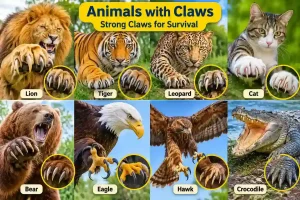
Animals with sharp claws live in many parts of the world. Some use their claws to catch food, while others use them to climb trees, dig holes, or protect themselves from danger. Claws come in many shapes and sizes. Some are long and curved, while others are short, strong, and pointed.
Lions, tigers, bears, eagles, owls, and even small animals like squirrels have claws. Some animals also have strong pincers, which they use to hold food or protect themselves.
In this guide, you will learn about animals with sharp claws, their names, special features, habitats, and how they use their claws in daily life.
What Are Sharp Claws?

Claws are hard, pointed body parts found at the ends of the toes of many animals. They are made mostly of keratin. This is the same material found in human fingernails and hair.
Animals use claws for many reasons. Some use them to catch and hold prey. Others use them to climb trees, dig into soil, or fight off enemies.
Claws are not all the same. Some animals have sharp, curved claws. Others have thick claws that help them dig. Birds of prey have special claws called talons. Crabs and lobsters have pincers that help them grab and crush food.
List of Animals with Sharp Claws
Many animals have sharp claws. Here are some well-known examples from different animal groups.
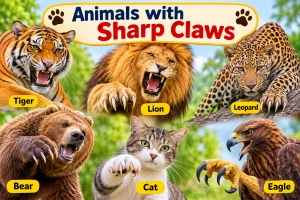
Lion
The lion (Panthera leo) is a large wild cat found in parts of Africa. It has strong paws and sharp, curved claws.
Lions use their claws to catch and hold prey. Their claws help them grip animals during a hunt. Lions can also pull their claws back when they are not using them. This helps keep the sharp tips in good shape.
Tiger
The tiger (Panthera tigris) is one of the largest wild cats in the world. It has strong legs and long, sharp claws.
Tigers use their claws to catch deer, wild boar, and other animals. Their claws help them hold prey while their powerful jaws do the rest. Tigers can also climb, scratch trees, and defend themselves.
Leopard
The leopard (Panthera pardus) has strong legs and sharp claws. It is also a very good climber.
Leopards use their claws to climb trees and carry food into high places. They often rest on tree branches and may keep their prey away from other predators.
Jaguar
The jaguar (Panthera onca) lives in Central and South America. It has a strong body, powerful jaws, and sharp claws.
Jaguars use their claws to climb, catch prey, and move through forests. They can hunt animals such as deer, fish, and small mammals. Their strong paws help them hold prey firmly.
Cheetah
The cheetah (Acinonyx jubatus) is the fastest land animal. It has claws that help it grip the ground while running.
Unlike most cats, a cheetah cannot pull its claws fully back. Its claws work a little like running shoes. They help the cheetah turn quickly and keep its balance during a chase.
Snow Leopard
The snow leopard (Panthera uncia) lives in cold mountain areas of Central and South Asia. It has wide paws and sharp claws.
Its claws help it grip rocky slopes and climb steep mountain paths. Its large paws also help it walk on snow. This makes it well suited to life in the Himalayas and other high mountains.
Bear
Bears have large paws and strong claws. Different bear species use their claws in different ways.
Grizzly bears (Ursus arctos horribilis) have long claws that help them dig for roots, insects, and food. They also use their claws to turn over logs and move soil.
American black bears (Ursus americanus) use their curved claws to climb trees. Polar bears (Ursus maritimus) use their claws to grip ice and hold prey.
Wolverine
The wolverine (Gulo gulo) is a strong animal from the weasel family. It lives in cold forests and mountain areas.
It has sharp claws that help it climb, dig, and move across snow. Wolverines also use their claws to open shelters in snow and search for food.
Honey Badger
The honey badger (Mellivora capensis) has long front claws. These claws are useful for digging holes in the ground.
It uses them to find insects, break open nests, and make shelters. Its strong body and thick skin also help protect it from danger.
Red Fox
The red fox (Vulpes vulpes) has small, sharp claws on its feet. These claws help it run, dig, and hold the ground.
Red foxes use their claws to make dens and search for small animals. They often hunt mice, rabbits, insects, and other small prey.
Raccoon
The raccoon (Procyon lotor) has five toes on each foot. Its sharp claws help it climb trees and hold food.
Raccoons are known for their clever paws. They use their front paws to explore objects, open food, and move small items.
Giant Anteater
The giant anteater (Myrmecophaga tridactyla) has very long and strong front claws.
It uses these claws to break open ant and termite nests. Then it uses its long tongue to collect the insects. Its claws are also useful for defense.
Giant Armadillo
The giant armadillo (Priodontes maximus) has large front claws. It uses them to dig deep holes and search for ants and termites.
Its strong claws help it move soil and build underground shelters. It is one of the largest living armadillo species.
Sloth
Sloths have long, curved claws that help them hang from tree branches. These claws are very useful because sloths spend much of their lives in trees.
Their claws help them grip branches without using much energy. They also use them to move slowly through the forest canopy.
Koala
The koala (Phascolarctos cinereus) has sharp claws on its feet. These claws help it climb eucalyptus trees.
Koalas have strong toes that grip tree bark. Their claws make it easier to climb and hold onto branches while resting or eating leaves.
Star-Nosed Mole
The star-nosed mole (Condylura cristata) has strong front feet with long claws.
It uses these claws to dig through wet soil and make underground tunnels. Its special nose helps it find food in dark places.
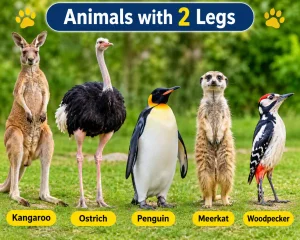
Meerkat
The meerkat (Suricata suricatta) is a small animal found in southern Africa. It has sharp claws that help it dig.
Meerkats use their claws to make burrows and search for insects, worms, and other small animals. Their underground homes help protect them from heat and predators.
Squirrel
Squirrels have small, curved claws that help them climb trees. Their sharp claws grip rough tree bark.
They also use their claws to hold food and move along branches. These claws help squirrels escape from predators.
Domestic Cat
The domestic cat (Felis catus) has sharp, curved claws. Cats can pull their claws back when they are not using them.
They use their claws to climb, catch toys, hold prey, and protect themselves. Scratching also helps cats remove old outer claw layers and mark their space.
Bald Eagle
The bald eagle (Haliaeetus leucocephalus) is a large bird of prey found in North America.
It has strong feet and sharp talons. These talons help it catch and hold fish, rabbits, and other small animals. Its curved talons make it a powerful hunter.
Harpy Eagle
The harpy eagle (Harpia harpyja) lives in tropical forests of Central and South America.
It has very large feet and powerful talons. These help it catch animals such as monkeys and sloths. Its claws are important tools for hunting in thick forests.
Great Horned Owl
The great horned owl (Bubo virginianus) is a bird of prey found across much of the Americas.
It has sharp talons that help it catch mice, rabbits, birds, and other small animals. It often hunts at night and uses its strong feet to hold prey.
Osprey
The osprey (Pandion haliaetus) is a bird that mainly eats fish.
It has sharp, curved talons and special rough areas on its feet. These features help it grip slippery fish while flying.
Cassowary
The cassowary (Casuarius casuarius) is a large, flightless bird found in Australia and New Guinea.
It has strong legs and sharp claws. The inner toe has a long, pointed claw that can be dangerous. Cassowaries mainly use their legs and feet for walking and defense.
Komodo Dragon
The Komodo dragon (Varanus komodoensis) is a large lizard found on some Indonesian islands.
It has strong legs and sharp claws. These claws help it dig, climb small slopes, and hold the ground while moving. It is also a powerful predator with sharp teeth.
Green Iguana
The green iguana (Iguana iguana) has long toes and sharp claws.
It uses its claws to climb trees and hold onto branches. Its strong feet help it move through trees and escape danger.
Alligator Snapping Turtle
The alligator snapping turtle (Macrochelys temminckii) lives in freshwater areas of the southeastern United States.
It has strong legs and claws that help it move along riverbeds and dig into soft ground. It also has a powerful jaw for catching food.
Animals with Sharp Claws and Teeth

Some animals have both sharp claws and strong teeth. These body parts work together to help them catch food and protect themselves.
Lions use their claws to hold prey and their teeth to bite. Tigers have sharp claws and strong jaws for hunting. Jaguars have powerful jaws and sharp claws that help them catch different types of prey.
Wolverines use their claws to dig and hold food. They also have strong teeth that help them eat meat and break hard food.
Komodo dragons have sharp claws, strong legs, and sharp teeth. They use these features to catch and eat prey.
These animals are often carnivores. They depend on other animals for food, so their claws and teeth are useful hunting tools.
Small Animals with Sharp Claws
Not all animals with sharp claws are large predators. Many small animals also have sharp claws that help them survive.
- Squirrels: Use their claws to climb trees and hold food.
- Mice: Use their small claws to climb and grip surfaces.
- Moles: Have strong front claws for digging underground.
- Meerkats: Use their claws to dig burrows and find insects.
- Geckos: Many geckos have tiny claws that help them grip rough surfaces.
- Raccoons: Use their claws to climb and handle food.
- Small owls: Use sharp talons to catch insects and small animals.
These examples show that even tiny claws can have an important job.
Animals with Razor Sharp Claws
Some animals have very sharp claws that help them catch prey or move through difficult places.
The harpy eagle has powerful talons for catching animals in trees. The tiger has sharp claws for holding prey. The snow leopard uses its claws to grip steep rocks.
The giant anteater has long front claws that can break open hard insect nests. The cassowary has a long, pointed claw on its inner toe.
The term “razor sharp” is often used to describe very sharp claws. It does not mean that every claw is as sharp as a razor.
Animals with Long Sharp Claws
Some animals have long claws that help them do special tasks.
The giant anteater has long front claws for opening ant and termite nests. Sloths have long, curved claws for hanging from branches. The star-nosed mole has strong claws for digging.
The cassowary has a long claw on its inner toe. Some bears also have long front claws that help them dig for food.
Long claws are not always the sharpest. Their shape and strength depend on how an animal uses them.
Animals with the Strongest Claws
It is difficult to name one animal as having the strongest claws. Different animals have claws made for different jobs.
Bears have strong claws for digging and moving heavy soil. Giant anteaters have powerful claws for breaking open termite nests. Harpy eagles have strong talons for catching and holding prey.
Wolverines have tough claws for climbing and digging. Big cats have sharp, curved claws that help them hold struggling animals.
The strongest claws depend on what you are measuring. A claw that is best for digging may not be best for catching prey.
Animals That Use Their Claws for Climbing
Many animals use claws to climb trees, rocks, and other surfaces.
Leopards use their claws to climb trees and carry food. Squirrels use their small claws to grip tree bark. Koalas use their claws to climb eucalyptus trees.
Sloths have long, curved claws that help them hang from branches. Snow leopards use their claws to grip rocky mountain paths.
Cats also use their claws to climb and hold onto different surfaces.
Climbing claws help animals find food, escape danger, and reach safe resting places.
Animals That Use Their Claws for Digging

Some animals have strong front claws that work like small digging tools.
Giant anteaters break open ant and termite nests with their claws. Moles use their wide front feet to dig tunnels through soil. Badgers use their claws to make underground homes.
Honey badgers dig for insects and other food. Armadillos use their claws to dig burrows and search for small animals.
Digging helps these animals find food, hide from predators, and stay safe.
Animals with Sharp Talons
Talons are the strong, curved claws found on birds of prey. They are different from the claws of most mammals.
Eagles, hawks, falcons, and owls have talons. These birds use them to catch and hold prey.
The bald eagle uses its talons to catch fish. The harpy eagle uses its powerful feet to catch animals in trees. The great horned owl uses its talons to catch mice and rabbits.
Which Bird Hunts Small Animals with Sharp Claws?
Many birds hunt small animals with sharp claws. Owls, hawks, falcons, and eagles are common examples.
The great horned owl hunts mice, rabbits, and small birds. Hawks often catch rodents and other small animals. Falcons use their sharp talons to hold prey after a fast chase.
These birds are called birds of prey because they hunt other animals for food.
Animals with Strong Paws
Some animals have strong paws that help them hunt, climb, dig, or move heavy objects.
Bears have large paws with strong claws. Tigers and lions have powerful paws that help them hold prey. Wolverines have strong feet for digging and moving across snow.
Big cats also have soft foot pads that help them move quietly. This is useful when they are trying to get close to prey.
Why Do Carnivorous Animals Have Powerful Paws with Sharp Claws?
Carnivorous animals eat other animals. Many of them have powerful paws and sharp claws because they need to catch and hold prey.
A tiger uses its paws to grab an animal during a hunt. A lion uses its claws to hold prey while biting. An eagle uses its talons to catch fish or small animals.
These body parts help predators hunt, protect food, and defend themselves. However, not every meat-eating animal has sharp claws. Some depend more on speed, teeth, or other hunting skills.
Animals with Claws Like Crab
Crabs have strong pincers, also called claws in everyday language. These are not the same as the claws found on cats or bears.
Crabs use their pincers to grab food, break shells, and protect themselves. Some crabs also use them to fight other crabs.
Lobsters have large pincers. One claw may be used for crushing, while the other may be used for cutting or holding food.
Crayfish also have two front pincers. They use them to catch food and defend themselves.
Fiddler crabs are known for the large claw found on one side of the body in males. They use it to show strength and attract mates.
Animals with Strong Pincers
Pincers are special gripping parts found in some animals. They often work like two fingers that close together.
Crabs use pincers to hold food and protect themselves. Lobsters use their claws to crush shells and catch small animals. Crayfish use their pincers to hold food and defend their bodies.
Scorpions also have pincers, but they are not the same as crab claws. They use them to grab prey and protect themselves.
Pincers are useful for gripping and crushing, while many animal claws are mainly used for climbing, digging, or catching prey.
An Animal with Tusks
Tusks are long teeth that grow outside an animal’s mouth. They are not claws, but they are another important body feature.
Elephants have large tusks made of ivory. They use them to dig, move objects, and protect themselves.
Wild boars have tusks that help them fight and defend themselves. Walruses have long tusks that help them pull themselves onto ice and show strength.
The narwhal is a sea animal with a long tooth that looks like a tusk. It is often called the unicorn of the sea.
Some animals have both claws and tusks, but these body parts have different jobs.
What Animal Has the Longest Claws in the World?
There is no single simple answer because animals have different types of claws. Some have long claws for digging, while others have long claws for hunting or defense.
The giant anteater has very long front claws that help it open insect nests. The sloth has long, curved claws that help it hang from trees.
The cassowary is known for its long inner toe claw, which can reach around five inches in some reports. This claw is used mainly for defense.
So, the answer depends on the type of claw and how its length is measured.
Retractable and Non-Retractable Claws
Animals have different types of claws. Some can pull their claws back, while others cannot.
Retractable claws can be pulled back into a protected position. Lions, tigers, leopards, and domestic cats have retractable claws. This helps keep their sharp tips from wearing down.
Non-retractable claws stay visible most of the time. Dogs, bears, and many birds have claws that cannot be fully pulled back.
Semi-retractable claws have some movement but do not work like the fully retractable claws of cats.
These differences help animals move and survive in their own habitats.
Claws, Talons, Pincers, and Hooves: What Is the Difference?

These body parts may look similar, but they have different shapes and uses.
- Claws: Hard, pointed parts at the ends of many animal toes. Cats, bears, and lizards have claws.
- Talons: Strong, curved claws found on birds of prey, such as eagles and owls.
- Pincers: Two-part gripping tools found on crabs, lobsters, and scorpions.
- Hooves: Hard coverings on the feet of animals such as horses, deer, and cattle.
Some animals also have nails instead of sharp claws. Human fingernails are one example.
How Do Sharp Claws Help Animals Survive?
Sharp claws help animals in many ways.
Hunting: Tigers, lions, and eagles use claws or talons to catch prey.
Climbing: Squirrels, cats, and koalas use claws to grip trees.
Digging: Moles, badgers, and giant anteaters use strong claws to move soil and open nests.
Defense: Cassowaries, bears, and other animals may use their claws to protect themselves.
Holding food: Raccoons and many other animals use their claws to hold and move food.
Claws are an important physical adaptation. Over many generations, animals have developed different claw shapes to fit their way of life.
Interesting Facts About Animals with Sharp Claws

- Cats can pull their claws back to help protect the sharp tips.
- Cheetahs use their claws to grip the ground while running.
- Sloths use long claws to hang from tree branches.
- Eagles use talons to catch and hold prey.
- Moles have strong front claws for digging underground.
- Giant anteaters use their claws to break open termite nests.
- Crabs use pincers to hold food and protect themselves.
- Koalas use sharp claws to climb eucalyptus trees.
- Bears use their claws for digging, climbing, and finding food.
- Human fingernails and animal claws are both made mostly of keratin.
FAQs About Animals with Sharp Claws
Some examples are lions, tigers, leopards, jaguars, bears, wolverines, sloths, koalas, giant anteaters, eagles, owls, and Komodo dragons.
Squirrels, mice, moles, meerkats, geckos, and small owls have claws. They use them to climb, dig, grip surfaces, or catch food.
Owls, hawks, falcons, and eagles hunt small animals with sharp talons. They use these strong claws to catch and hold their prey.
Many carnivorous animals use sharp claws to catch, hold, and control prey.
Talons are a special type of claw found on birds of prey. They are usually strong and curved to help birds catch and hold food.
Crabs, lobsters, and crayfish have pincers that look like claws. They use these parts to grab food, crush shells, and protect themselves.
Giant anteaters have long front claws for breaking open insect nests. Sloths have long, curved claws for hanging from trees.
Elephants, wild boars, walruses, and narwhals have tusks or tusk-like teeth. These body parts help with digging, defense, movement, or other tasks.
No. Some animals have flat nails, hooves, or other types of feet. Claws are found in many mammals, birds, reptiles, and other animal groups.
Leopards, squirrels, koalas, sloths, and many cats use their claws to climb trees or grip other surfaces.
Final Thoughts
Animals with sharp claws live in forests, mountains, grasslands, deserts, and many other places. Their claws come in different shapes and sizes. Some are made for hunting, while others help animals climb trees, dig holes, hold food, or stay safe.
Lions, tigers, bears, eagles, owls, sloths, anteaters, and even small squirrels all use their claws in different ways. Birds of prey have talons, while crabs and lobsters have pincers.
Learning about these animals helps us understand how their bodies fit their needs and how they survive in nature. Every claw has a purpose, from helping a tiny squirrel climb a tree to helping a powerful eagle catch its food.

Owen Parker writes about animals, wildlife, behavior, habitats, physical traits, and interesting species facts. He enjoys researching animal topics and explaining them in simple, clear language that is easy for everyone to understand.