Animals with horns live in many parts of the world. You can find them in grasslands, forests, mountains, deserts, and farms.
Horns can be short, long, straight, curved, or twisted. Animals use their horns to protect themselves, fight, and protect their young.
In this guide, you will learn about animals with horns, their names, horn shapes, habitats, and many interesting facts.
What Are Horns?
Horns are hard parts that grow on the heads of many animals.
Many animals with true horns have a hard bone inside. The outside is covered with a strong material called keratin.
Horns can have many shapes. Some are straight. Some are curved or twisted. Others can be very wide.
Goats, cattle, sheep, buffalo, and many antelopes have horns.
Not every animal with a head structure has a true horn. Deer have antlers. Giraffes have ossicones. Elephants have tusks.
List of Animals With Horns
Here are some well-known animals with horns:
- African buffalo
- Addax
- Alpine ibex
- American bison
- Blackbuck
- Bighorn sheep
- Cattle
- Gaur
- Gemsbok
- Greater kudu
- Markhor
- Mouflon
- Nubian ibex
- Oryx
- Saiga
- Scimitar-horned oryx
- Water buffalo
- Yak
- Takin
- Springbok
- Eland
- Impala
- Waterbuck
- Pronghorn
Some of these animals have true horns.
Animals With Horns: Quick Comparison
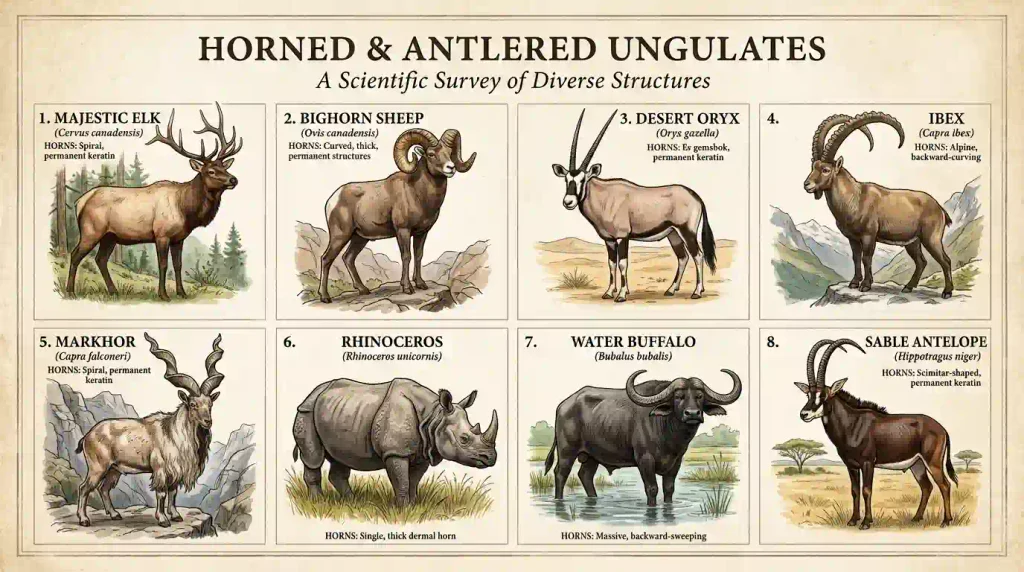
| Animal | Horn Shape | Habitat | Region |
| African buffalo | Curved and wide | Grasslands and woodlands | Africa |
| Bighorn sheep | Large and curved | Mountains | North America |
| Markhor | Long and twisted | Mountains | Asia |
| Oryx | Long and straight | Desert and grassland | Africa and Asia |
| Blackbuck | Spiral | Grassland | South Asia |
| Greater kudu | Long and spiral | Woodland and savanna | Africa |
| Ibex | Curved | Mountains | Europe, Asia, and Africa |
| Gaur | Short and curved | Forests | South Asia |
| Water buffalo | Wide and curved | Wet areas and farms | Asia |
| Ankole-Watusi | Very large | Farms and grasslands | Africa |
Animals With Horns Names
Some common animals with horns are goats, cattle, sheep, buffalo, antelopes, ibex, markhor, bison, oryx, and kudu.
Antelopes are a large group of animals. Many antelopes have horns.
Blackbuck, springbok, gazelle, kudu, eland, oryx, and waterbuck are some examples.
Many horned animals are called ruminants. These animals eat plants and have a special way of digesting their food.
Animals With Horns on Head
Most familiar horns grow on the animal’s head.
Goats have horns on the top of their heads.
Cattle have horns on both sides of their heads.
African buffalo have large curved horns.
Bighorn sheep have large, curved horns.
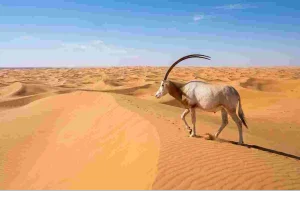
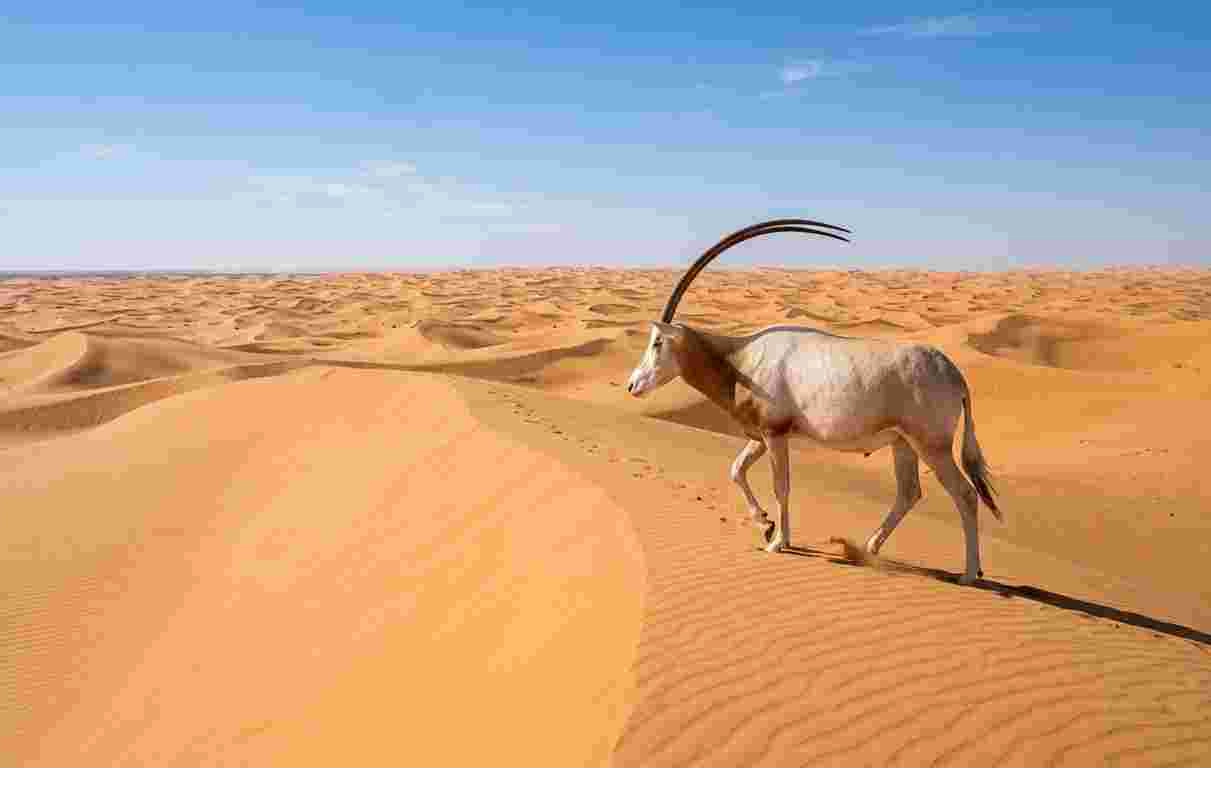
Oryx have long, straight horns.
Markhor have twisted horns.
Greater kudu have large spiral horns.
The shape and size of horns can help us identify an animal.
Animals With Horns That Start With C
If you are looking for animals with horns that start with C, here are some examples:
- Cattle
- Cape buffalo
- Chamois
- Chiru
- Cuvier’s gazelle
The Cape buffalo is an African animal. It has strong, curved horns and a large body.
Animals With Horns Pictures
Pictures can help you learn about horned animals.
When you look at a picture, check these things:
- Horn shape
- Horn size
- Horn direction
- Body size
- Face shape
- Fur color
- Habitat
- Number of horns
Animals With Horns by Number of Letters
Animal names can also be useful for word games.
Four-Letter Names
- Goat
- Ibex
- Oryx
Seven-Letter Names
- Buffalo
- Markhor
- Mouflon
- Gemsbok
- Bighorn
Eight-Letter Names
- Antelope
Nine-Letter Names
- Pronghorn
- Waterbuck
African Animals With Horns
Africa has many animals with horns.
Some examples are:
- African buffalo
- Cape buffalo
- Greater kudu
- Eland
- Oryx
- Gemsbok
- Impala
- Springbok
- Waterbuck
- Giant eland
- Scimitar-horned oryx
- Addax
These animals live in different places. Some live in grasslands. Others live in woodlands or deserts.
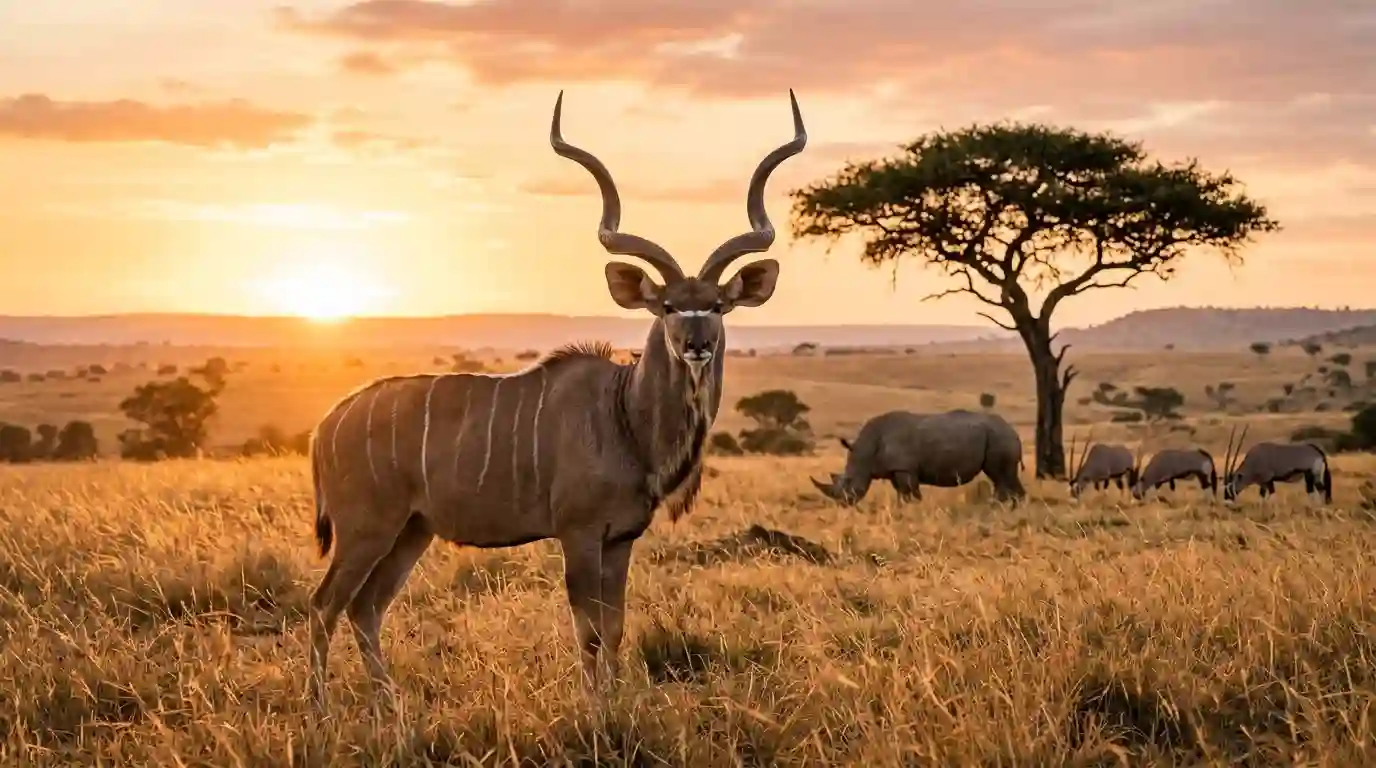
The greater kudu is famous for its large spiral horns.
The gemsbok has long, straight horns.
The African buffalo has heavy horns that cover much of the front of its head.
Asian Animals With Horns
Asia is home to many horned animals.
Examples include:
- Markhor
- Blackbuck
- Gaur
- Water buffalo
- Yak
- Saiga
- Takin
- Alpine ibex
- Nubian ibex
The markhor is known for its long, twisted horns.
The blackbuck is known for its spiral horns. Male blackbucks usually have larger horns.
The saiga has a very unusual nose and lives in open areas of Central Asia.
Animals With Horns in North America
North America has some famous horned animals.
These include:
- American bison
- Bighorn sheep
- Pronghorn
- Mountain goat
Bighorn sheep have large curved horns. Male bighorn sheep usually have much larger horns than females.
The American bison has short, curved horns.
The pronghorn has a special type of horn structure. It is not exactly like the horns of cattle or goats.
Female Animals With Horns
Some female animals have horns too.
Examples include:
- African buffalo
- Goats
- Some sheep
- Many antelopes
- Ibex
- Oryx
- Water buffalo
In some animals, males have bigger horns than females.
In other animals, males and females can have horns that look quite similar.
Horn size can depend on the animal’s species, age, sex, genes, food, and health.
Animals Born With Horns
Most animals are not born with large horns.
Some animals have very small horn buds when they are young. These grow as the animal gets older.
Young goats, cattle, sheep, and other horned animals can develop horns as they grow.
The final size and shape of a horn can depend on genes, age, sex, and health.
Wild Animals With Horns
Many wild animals have horns.
Some examples are:
- African buffalo
- Bighorn sheep
- Markhor
- Ibex
- Oryx
- Kudu
- Blackbuck
- Eland
- Addax
- Saiga
- Gaur
Wild animals can use their horns to protect themselves and compete with other animals.
Goat-Like Animals With Horns
Some animals look like goats and have horns.
Examples include:
- Ibex
- Markhor
- Mountain goat
- Takin
- Chamois
- Mouflon
- Bharal
Ibex are mountain animals with strong curved horns.
The markhor is easy to recognize because of its long, twisted horns.
Animals Like Deer With Horns
Some animals look like deer but have horns.
Examples include:
- Kudu
- Gazelle
- Oryx
- Blackbuck
- Eland
- Waterbuck
- Springbok
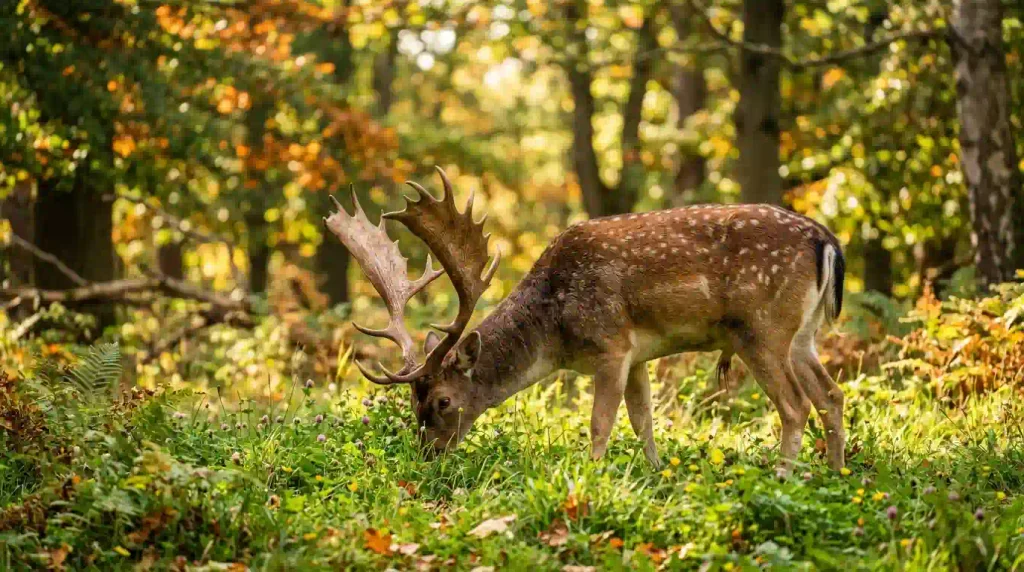
Deer do not have true horns. They have antlers.
This difference is important when identifying animals.
Animals With Horns or Antlers
Horns and antlers are not the same.
Animals with horns include:
- Goats
- Cattle
- Buffalo
- Sheep
- Many antelopes
Animals with antlers include:
- Deer
- Elk
- Moose
Pronghorns are special. Their horn structure is different from both normal horns and deer antlers.
Animals in the Desert With Horns
Some horned animals can live in hot and dry deserts.
Examples include:
- Oryx
- Addax
- Arabian oryx
- Scimitar-horned oryx
- Dorcas gazelle
These animals have special body features that help them live where water and food can be hard to find.
The addax and oryx are well known for living in dry areas.
Mountain Animals With Horns
Many horned animals live in mountains.
Examples include:
- Bighorn sheep
- Ibex
- Markhor
- Mountain goat
- Takin
- Bharal
- Chamois
These animals have strong legs and hooves. These help them move over steep and rocky land.
Farm Animals With Horns
Some common farm animals have horns.
These include:
- Cattle
- Goats
- Sheep
- Water buffalo
- Yak
The Texas Longhorn is a famous cattle breed. It is known for its very long horns.
Different Types of Animal Horns
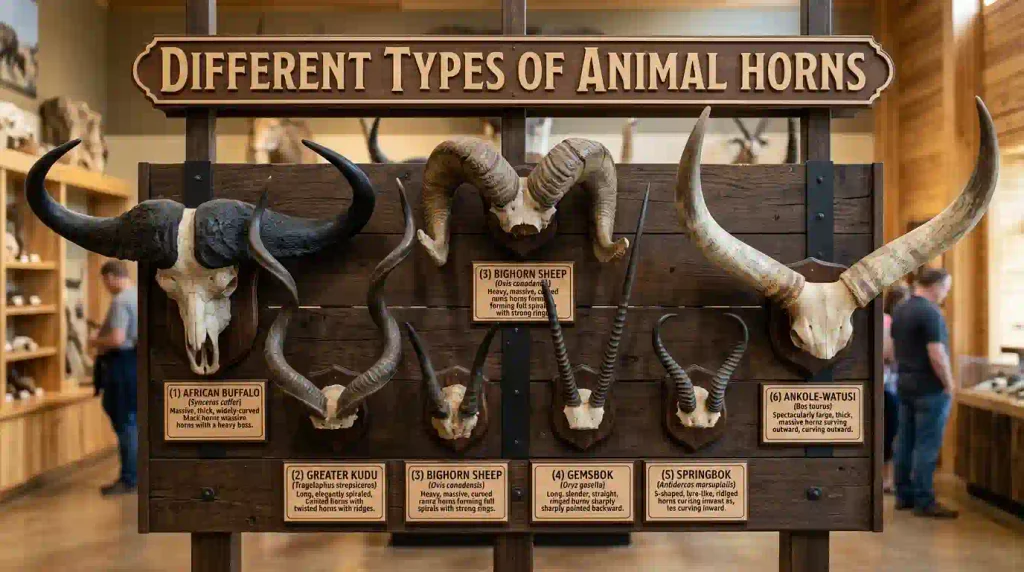
Animal horns come in many shapes.
Straight Horns
Oryx are famous for their long, straight horns.
Curved Horns
African buffalo and bighorn sheep have strong curved horns.
Spiral Horns
Kudu and blackbuck are known for spiral horns.
Twisted Horns
Markhor have long horns with a twisted shape.
Wide Horns
Water buffalo can have very wide horns.
Branched Horns
The pronghorn has a special branched horn structure.
Its outer horn covering is shed and replaced.
Why Do Animals Have Horns?
Animals have horns for many reasons.
Protection
Horns can help animals protect themselves from danger.
Fighting
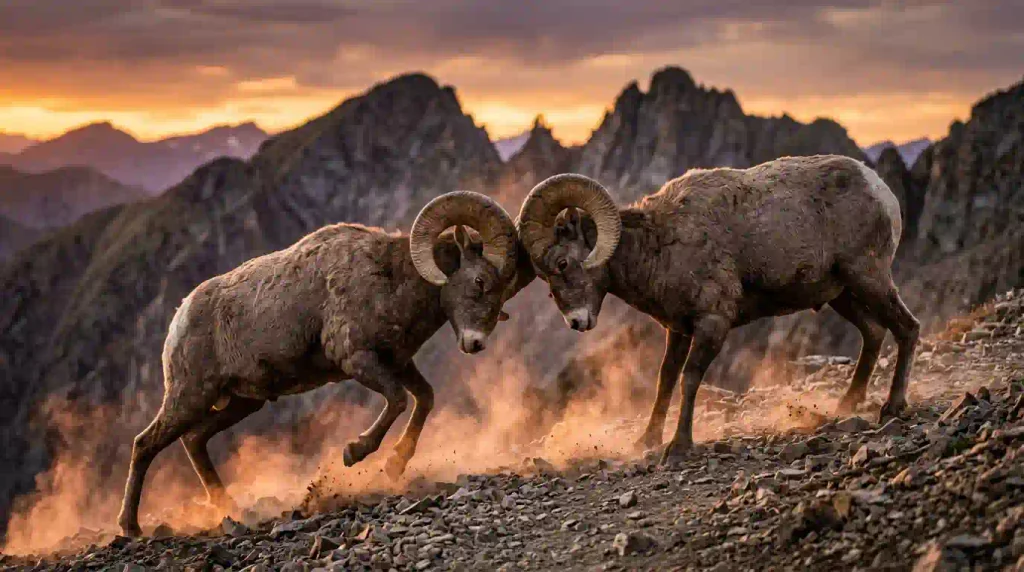
Some animals use their horns when fighting other animals.
Finding a Mate
Male animals may use their horns when competing for a mate.
Showing Strength
Large horns can help an animal show its strength.
Protecting Young
Adult animals can use their horns to protect their young.
How Do Animal Horns Grow?
True horns grow from structures connected to the animal’s skull.
In many animals, the horn has a bony part inside and a hard keratin covering outside.
Horns grow as the animal gets older.
Horn growth can depend on:
- Species
- Age
- Sex
- Genes
- Food
- Health
- Hormones
Different animals have different horn growth patterns.
How Animals Use Their Horns
Animals use their horns in different ways.
They may use them for:
- Protection
- Fighting
- Competition
- Finding a mate
- Showing strength
- Protecting young
Some animals fight often with their horns. Others mainly use their horns as a warning or for protection.
How to Identify Animals by Their Horns
You can often identify an animal by looking at its horns.
Check the Horn Shape
Are the horns straight, curved, spiral, or twisted?
Check the Horn Size
Are they short or long?
Check the Number of Horns
Most familiar horned animals have two horns, but some animals have unusual horn structures.
Check the Body
Look at the animal’s size, face, legs, and fur.
Check the Habitat
Think about where the animal lives.
An animal in a desert may be different from an animal living high in the mountains.
Horns vs. Antlers
| Feature | Horns | Antlers |
| Animals | Goats, cattle, buffalo, sheep, antelopes | Deer, elk, moose |
| Main material | Bone and keratin in many true horns | Bone |
| Growth | Usually stay for life | Usually shed and grow again |
| Shape | Often curved or spiral | Often branched |
| Example | Markhor | Elk |
Horns vs. Tusks
Tusks are not horns.
A tusk is a long tooth.
Elephants, walruses, and narwhals have tusks.
A narwhal’s long tusk may look like a horn, but it is actually a tooth.
Elephant tusks are also teeth.
Horn-Like Structures in Animals
Some animals have head structures that look like horns but are different.
Giraffe Ossicones
Giraffes have ossicones.
These are bony structures covered with skin and hair. They are not true horns.
Rhinoceros Horn
A rhinoceros has a horn made mostly of keratin.
It does not have the same bony core found inside a typical bovid horn.
The Indian rhinoceros and white rhinoceros are examples.
Pronghorn
The pronghorn has a special horn structure.
Its outer covering is shed and replaced. This makes it unusual.
Antlers
Deer, elk, and moose have antlers.
Antlers are made of bone and are usually shed and grown again.
Animal Horns and Conservation
Some horned animals need protection.
They can face dangers such as:
- Poaching
- Illegal hunting
- Wildlife trafficking
- Habitat loss
- Loss of living space
- Overhunting
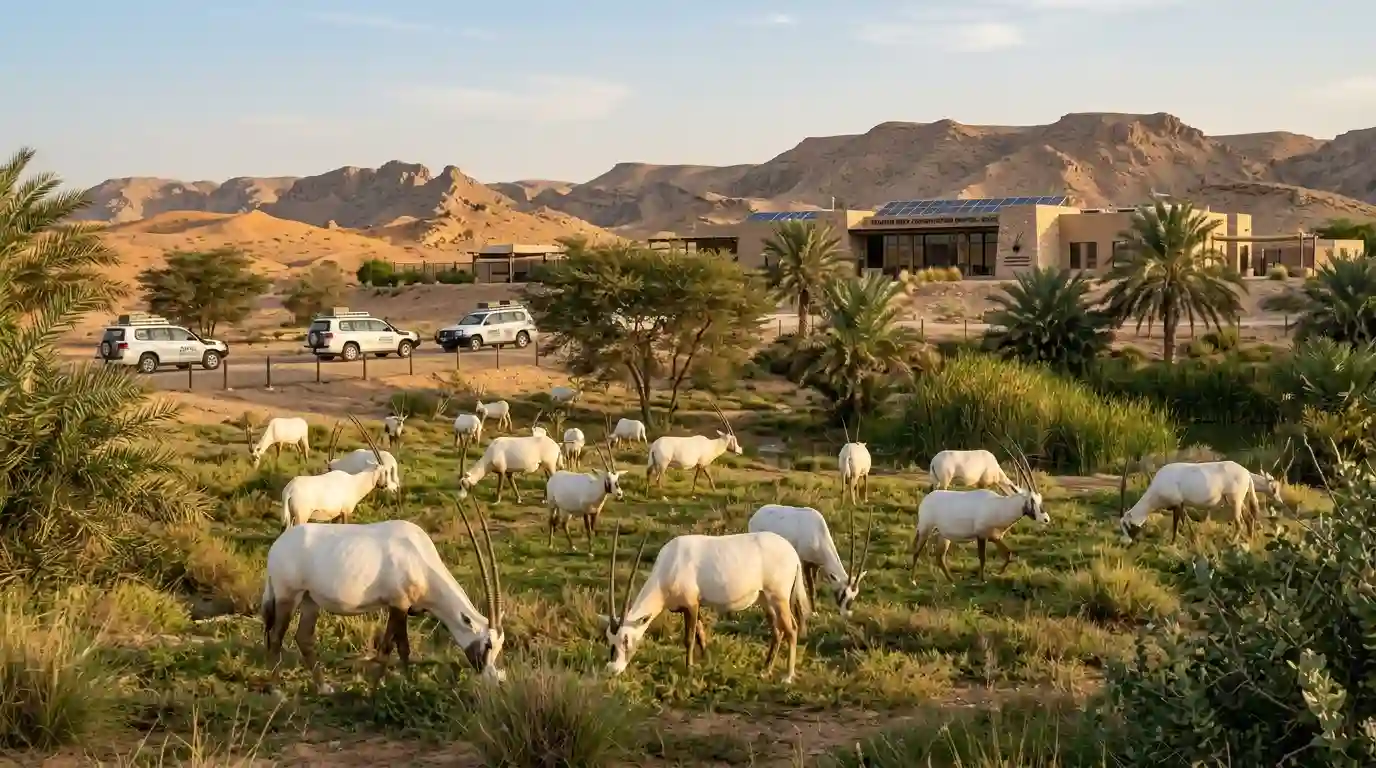
Wildlife groups work to protect animals and their habitats.
Conservation work can include protecting habitats, stopping poaching, breeding animals safely, and helping some species return to areas where they once lived.
Interesting Facts About Horned Animals
- Not every head structure is a true horn.
- Deer have antlers, not true horns.
- Elephant tusks are teeth.
- A narwhal’s tusk is a tooth.
- Giraffes have ossicones.
- Markhor have twisted horns.
- Kudu have spiral horns.
- Oryx have long, straight horns.
- Bighorn sheep have large curved horns.
- African buffalo have heavy curved horns.
- Some female animals have horns.
- Horns can grow as an animal gets older.
- Pronghorns have a special horn structure.
- Many horned animals are ruminants.
- Bovidae is a family that includes many animals with horns.
Animals With Horns for Kids
| Animal | Easy Fact |
| Goat | Has curved horns |
| Cow | May have two horns |
| Buffalo | Has strong curved horns |
| Bighorn sheep | Has large curved horns |
| Oryx | Has long straight horns |
| Markhor | Has twisted horns |
| Kudu | Has spiral horns |
| Ibex | Has curved horns |
| Bison | Has short curved horns |
| Blackbuck | Males have spiral horns |
A simple way to learn about horned animals is to look at their horn shape, body, and habitat.
FAQs
Many goats, sheep, cattle, buffalo, antelopes, ibex, markhor, and other mammals have horns.
Some examples are goat, cattle, African buffalo, bighorn sheep, markhor, ibex, oryx, kudu, blackbuck, and water buffalo.
Some examples are cattle, Cape buffalo, chamois, chiru, and Cuvier’s gazelle
Goats, cattle, buffalo, sheep, antelopes, ibex, markhor, and many other mammals have horns on their heads.
Yes. Female African buffalo, goats, many antelopes, ibex, and some other animals can have horns.
Most animals are not born with large horns. Small horn buds may appear early and grow as the animal gets older.
African buffalo, kudu, oryx, gemsbok, eland, impala, springbok, waterbuck, addax, and other African antelopes have horns.
Oryx, addax, Arabian oryx, and some gazelles are examples of desert animals with horns.
Deer have antlers instead of true horns. Antlers are made of bone and are usually shed and grown again.
A narwhal has a long tusk. It may look like a horn, but it is actually a tooth.
Animals may use horns for protection, fighting, competition, showing strength, and protecting their young.
In animals with true horns, a horn grows around a bony core and has a hard outer covering. Growth depends on the animal’s species, age, sex, genes, and health.
Final Thoughts
Animals with horns are found in many parts of the world.
African buffalo, kudu, markhor, bighorn sheep, oryx, water buffalo, and many other animals have different types of horns.
Some horns are straight. Some are curved, spiral, or twisted.
Learning about these structures can help you understand animals and the places where they live.
Many animals need safe habitats and protection from hunting and habitat loss.